Most Duplicate Grocery Purchases Start With Uncertainty
People rarely buy duplicate groceries intentionally.
It usually happens because they weren’t completely sure what existed at home.
And uncertainty changes shopping behaviour fast.
Because when you’re standing in the grocery aisle thinking:
“Do we still have mayo?”
…your brain has two choices:
- risk running out
- buy another one
Most people buy another one.
Not because they’re irresponsible.
Because avoiding inconvenience feels safer than risking another grocery trip later.
That tiny decision repeats itself constantly during shopping.
And suddenly the fridge becomes half inventory system, half condiment warehouse.
The “We Might Need It” Purchase
This one quietly destroys grocery budgets.
You buy something “just in case.”
Not because it belongs to a meal.
Not because you checked inventory.
Just because uncertainty makes your brain uncomfortable.
This especially happens with:
- sauces
- cheese
- salad dressing
- freezer items
- produce
- snack foods
- pantry staples
The problem is backup groceries slowly become invisible groceries.
Now instead of reducing stress, they create clutter.
And clutter makes future grocery decisions even harder.
Duplicate Groceries Are Usually A Visibility Problem
Most kitchens are not designed to show you what you already own.
They’re designed to store things wherever they physically fit.
That’s very different.
Because once ingredients become visually buried, they stop feeling mentally available.
This is why families often buy:
- more lettuce while lettuce already exists
- more yogurt while yogurt is hidden behind leftovers
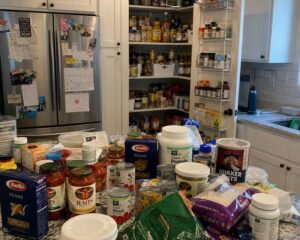
- another jar of pasta sauce while three are already living in the pantry
The food technically existed.
But functionally? It disappeared.
Visibility drives usage.
Not memory.
Pantry Clutter Creates False Scarcity
When kitchens become disorganized, your brain starts acting like resources are scarce even when they aren’t.
You feel like there’s:
- nothing for dinner
- no snacks
- no easy meals
- nothing in the pantry
Meanwhile there’s enough food in the house to feed everybody for days.
It’s just fragmented, hidden, and disconnected from meals.
This is also why grocery shopping feels mentally exhausting for so many parents.
They’re not just shopping.
They’re trying to mentally rebuild an inventory system that quietly collapsed earlier in the week.
Duplicate Produce Is Especially Sneaky
Produce disappears incredibly fast mentally.
Especially once it enters drawers.
Because produce drawers create delayed visibility.
You don’t see the spinach while making lunch.
You don’t see the cucumbers while unloading groceries.
You don’t notice the strawberries until they’ve entered a medically concerning phase of existence.
That’s why duplicate produce purchases happen constantly.
Families buy ingredients they intended to use, but forgot they already purchased.
Then suddenly there are:
- two lettuce containers
- multiple half-used carrot bags
- three open berry containers
- one cucumber nobody remembers buying
And now dinner feels stressful because ingredients are expiring faster than meals are happening.
This Is Why Meal-Based Grocery Planning Works Better
Random grocery lists create random grocery outcomes.
Meal-based grocery planning creates structure.
Instead of buying ingredients individually, you’re buying meals intentionally.
That changes everything.
Inside MyGroceryPlan, groceries stay attached to the meals they belong to.
So instead of trying to remember:
- why you bought ingredients
- what they were supposed to become
- whether you already had them
…the meals, recipes, and grocery list stay connected together.
Which dramatically reduces duplicate purchases over time.
Because food already has assigned jobs before shopping even starts.
The Fridge Reset Prevents Duplicate Spending
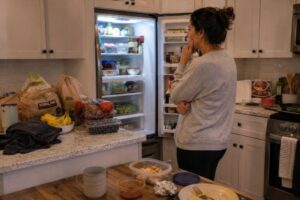
One of the simplest ways to reduce duplicate groceries is doing a quick fridge and pantry reset before shopping.
Not a deep clean.
A reset.
Ten minutes.
That’s it.
The goal is simply to:
- identify duplicates
- check expiration dates
- locate leftovers
- see what produce still exists
- reconnect ingredients to meals
This alone changes grocery decisions immediately.
Because once food becomes visible again, your brain stops shopping from uncertainty.
Read next: Clean Out Your Fridge Before Grocery Shopping
Freezers Quietly Create Duplicate Purchases Too
Especially chest freezers.
Chest freezers are basically confidence tests.
Because everybody thinks they know what’s in there.
Until they start digging.
Then suddenly:
- six frozen garlic breads
- mystery meat
- duplicate vegetables
- forgotten leftovers
- enough freezer-burned buns to open a restaurant nobody asked for
A disorganized freezer creates the same problem as a cluttered fridge: invisible inventory.
And invisible inventory always creates overspending.
That’s why rotating freezer food matters so much.
Read next: Use What You Have In Your Freezer
Read next: Your Freezer Should Be Saving You From Takeout
Duplicate Groceries Usually Mean The Kitchen System Broke Down
Not the person.
That’s important.
Because people blame themselves constantly for grocery waste.
But most duplicate grocery purchases happen because:
- meals changed
- schedules shifted
- food got buried
- leftovers became invisible
- nobody tracked inventory consistently
- dinner became reactive instead of planned
That’s a systems problem.
Not a character flaw.
The easier your kitchen makes it to see food, use food, assign meals, track ingredients, and recover from chaotic weeks, the less duplicate spending happens naturally.
Organized Kitchens Don’t Require Perfection
People imagine reducing food waste means:
- perfect meal prep
- strict organization
- labeled containers
- never forgetting ingredients again
Not true.
Most families simply need fewer disconnected groceries.
More overlap.
More visibility.
More intentional meals.
More backup plans.
Less random purchasing.
Because the goal isn’t becoming the world’s most organized household.
The goal is opening your fridge and not discovering three ranch dressings silently living completely separate lives.