

Sports Nights Are Where Dinner Plans Go To Die
Sports nights are where dinner plans usually collapse. A slow cooker freezer meal can prevent expensive takeout, stress, and last-minute chaos.
Groceries are expensive now.
Like…
offensively expensive.
You walk into the store for “just a few things” and somehow leave financially humbled by:
grapes
cheese
chicken
and the audacity of bell peppers
And yet somehow?
Despite spending hundreds of dollars on groceries…
families still end up standing in the kitchen at 5:17 PM saying:
“There’s nothing to eat.”
That feeling is the actual problem.
Not just grocery prices.
Not just budgeting.
The real issue is:
your groceries are not consistently turning into meals.
Because buying food and successfully USING food are two completely different skill sets.
And most kitchens are accidentally designed to fail at that process.
They Have A Friction Problem
This is the part nobody really talks about.
Dinner usually fails long before cooking starts.
It fails in tiny moments:
ingredients hidden in the back of the fridge
meat still frozen
leftovers nobody can see
vegetables without a planned purpose
too many dinner decisions happening while exhausted
The result?
Your brain quietly starts avoiding the kitchen.
Not because you’re lazy.
Because the kitchen feels mentally heavy.
And when dinner starts feeling mentally heavy…
people default to easier decisions.
Drive-thru.
Delivery.
Snack plates.
Random freezer scavenging.
“Everyone fend for yourselves.”
That’s why food waste and takeout often happen in the same households.
They’re connected.
Both are symptoms of dinner systems breaking down.
This is a huge difference.
Most kitchens are designed around:
“Where can I fit this?”
Not:
“How does this become dinner quickly?”
That sounds subtle.
It isn’t.
Because tired people need visibility.
They need momentum.
They need food that feels easy to USE.
Not just food that technically exists somewhere in the refrigerator.
This is why people forget ingredients they already bought.
Because hidden food creates invisible decisions.
And invisible decisions become expensive.
Every family does this sometimes.
You grocery shop for the version of yourself that:
wakes up energized
cooks every night
meal preps joyfully
never changes plans
definitely uses the spinach
apparently has unlimited emotional stability
Then real life shows up.
Kids get tired.
Work runs late.
Someone gets sick.
The week changes.
Energy disappears.
Now suddenly the groceries purchased for “healthy productive future-you” are slowly decomposing beside half a bottle of ranch dressing and a container of leftovers nobody trusts anymore.
This is why rigid meal plans often fail.
They’re built for ideal conditions.
Real families need flexible systems instead.
This changes everything.
Every ingredient entering your house should already have a purpose.
Not vague intentions.
Specific jobs.
That ground beef?
Tacos and pasta.
That rotisserie chicken?
Wraps, rice bowls, soup.
That sour cream?
Taco night and baked potatoes.
That spinach?
Pasta, eggs, smoothies.
Ingredients without assigned meals become refrigerator clutter incredibly fast.
Because the human brain does not enjoy solving dinner puzzles every single night.
Especially while tired.
Especially while hungry.
Especially while somebody is asking:
“What’s for dinner?”
every 11 minutes like a tiny emotionally unstable coworker.
This is also why meal-based grocery lists work so much better than random shopping lists.
When groceries are attached to actual meals, ingredients stop floating around the kitchen without a purpose.
Inside MyGroceryPlan, meals connect directly to the ingredient list, so instead of trying to remember what everything was FOR later… the plan already exists.
That dramatically reduces:
The fewer decisions left at 5 PM, the calmer dinner feels.
Most takeout doesn’t start with cravings.
It starts with friction.
Too many tiny obstacles:
no thawed protein
missing ingredients
cluttered fridge
too many choices
forgotten leftovers
unclear plan
At some point the brain decides:
“This is too much work.”
That’s the moment dinner quietly leaves the rails.
And honestly?
This is why some families feel weirdly stressed around food all the time.
Dinner never feels DONE.
It feels constantly unresolved.
Most people are not struggling with cooking skills.
They’re struggling with too many decisions happening at the wrong time of day.
That’s why dinner feels overwhelming even when food already exists in the house.
Reducing dinner decisions before 5 PM changes everything.
Not effort.
Decisions.
That’s the secret.
People think organized kitchens are about aesthetics.
Containers.
Labels.
Pinterest pantries.
No.
The best kitchen systems simply reduce the number of decisions required during chaotic moments.
That’s why certain small habits work so well:
cooked protein in the fridge
visible leftovers
emergency freezer meals
repeating favorite meals
grocery lists connected to actual meals
ingredients that overlap multiple dinners
weekly fridge resets
Those systems reduce friction.
And friction matters more than motivation.
Because motivated people still get tired.
This is also why I stopped trying to manage meals with random paper lists and mental reminders.
The problem wasn’t remembering groceries.
It was remembering:
That’s the entire reason we built MyGroceryPlan.
The meals, ingredients, grocery list, and recipes stay connected together instead of living in five different places.
Which means less mental load sitting in your kitchen every night.
This deserves its own section because people carry WAY too much guilt around this.
Emergency meals are not failure meals.
They are stability meals.
There will be nights where:
everybody is exhausted
dinner plans collapse
schedules change
nobody wants to cook
That is normal.
The financially dangerous households are usually the ones pretending this never happens.
Because then every chaotic night becomes:
“Should we just order something?”
That adds up fast.
Emergency meals interrupt that cycle.
Frozen pizza.
Chicken fingers.
Soup.
Lasagna.
Meatballs.
Garlic bread.
Frozen dumplings.
These meals buy relief.
And relief matters.
Leftovers usually don’t fail because people hate leftovers.
They fail because leftovers disappear into the refrigerator ecosystem.
One container behind juice.
Another behind yogurt.
Another under foil.
Another hidden in a mystery bowl no one wants to investigate.
Then three days later everyone says:
“We should really clean out the fridge.”
The easiest fix?
Create a designated leftover zone.
One shelf.
Every time.
No wandering leftovers.
Because people are dramatically more likely to eat food they can actually SEE.
Also, most leftovers fail because nobody planned for them.
But one intentional leftover night each week can:
And honestly?
Some meals taste better the second time anyway.
A freezer should make life easier.
Not become a frozen archive of abandoned intentions.
If you cannot identify what something is quickly…
future-you probably isn’t cooking it.
The best freezers contain:
backup proteins
fast dinners
leftovers worth saving
meal components
emergency meals
Not:
twelve frozen bananas and emotional confusion.
It’s pressure relief.
The goal is reducing the number of nights where dinner completely falls apart and turns into expensive takeout.
That’s why intentional freezer meals matter so much.
This is important.
Because people often think meal planning means:
perfect organization forever.
It doesn’t.
It means reducing the number of nightly emergencies.
That’s all.
The goal is:
fewer wasted groceries
fewer stressful dinner decisions
fewer expensive takeout nights
fewer duplicate purchases
fewer moments staring into the fridge hoping food magically turns into a plan
That’s why systems matter more than willpower.
Willpower disappears when people are tired.
Systems keep functioning anyway.
They just remove more friction.
They repeat meals.
Reuse ingredients.
Keep backup dinners.
Assign food jobs.
Use leftovers intentionally.
Reduce dinner decisions before dinner happens.
That’s why groceries start stretching further.
Not because they suddenly became perfect.
Because the food consistently becomes meals before it quietly expires in the produce drawer beside the cilantro everyone forgot existed.
Sports nights are where dinner plans usually collapse. A slow cooker freezer meal can prevent expensive takeout, stress, and last-minute chaos.
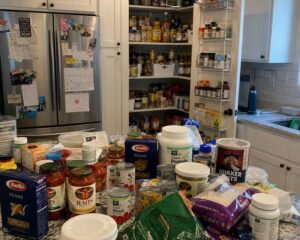
Families accidentally buy duplicate groceries when ingredients become buried, forgotten, and disconnected from meals. Here’s why it happens — and how to stop it.
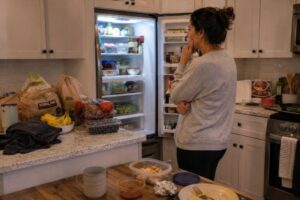
Disorganized groceries quietly create food waste, duplicate spending, takeout nights, and dinner stress. Most families don’t need stricter budgets — they need less kitchen friction.